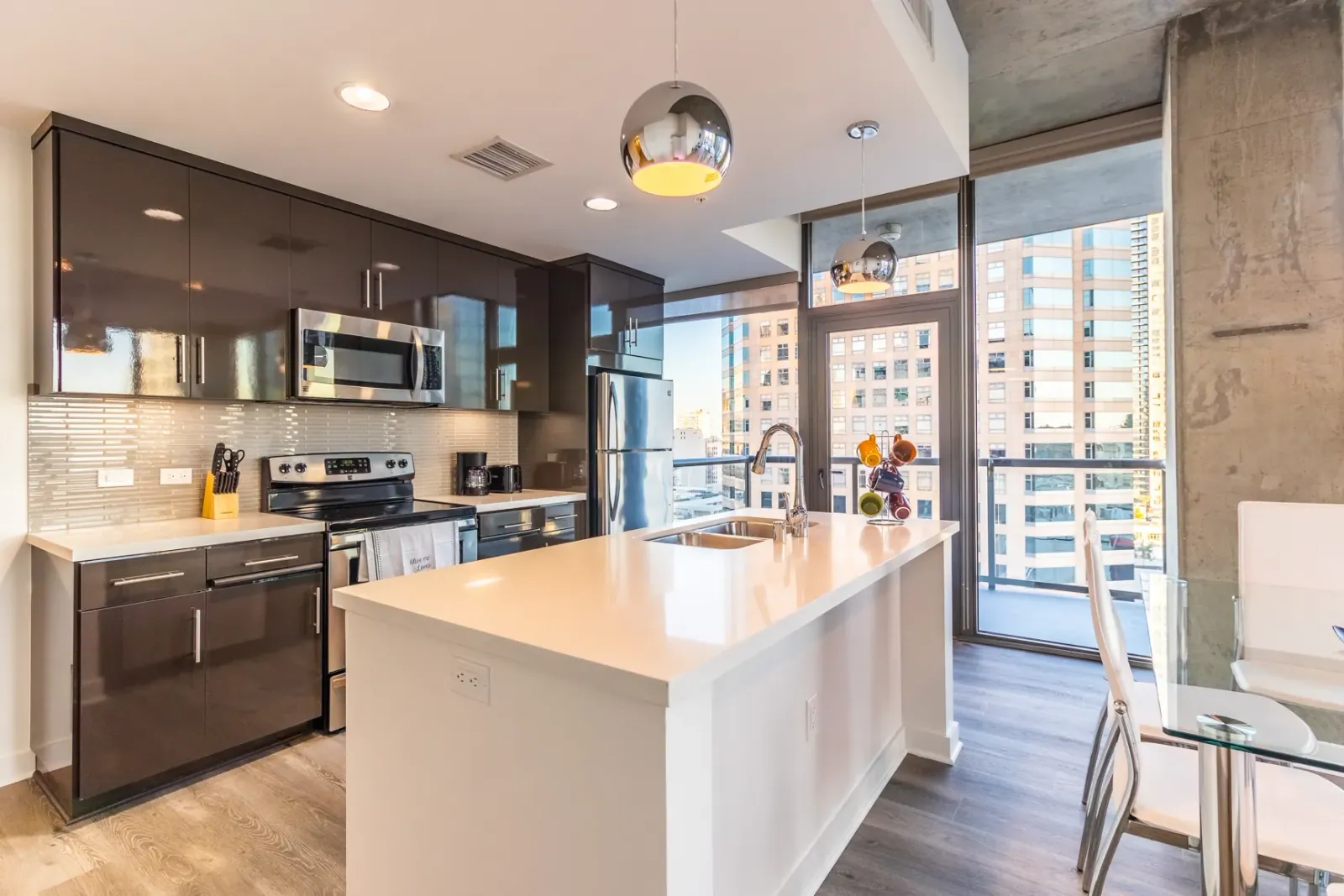
Quick answer
Choose a kitchen facelift when the layout works, cabinet boxes are sound and the problems are mainly visual. Choose a full renovation when storage, traffic flow, lighting, services or damaged components need to change. A facelift can refresh a suitable kitchen efficiently, but covering worn-out cabinets or preserving a layout that does not function is usually false economy.
“We want to update the kitchen” can mean new handles and paint—or removing everything and changing the room. Defining the underlying problem is the fastest way to choose the right scope for your Calgary kitchen renovation.
Kitchen facelift vs. full renovation
| Decision | Kitchen facelift | Full kitchen renovation |
|---|---|---|
| Layout | Usually stays in place. | Can be redesigned for circulation, storage and appliance locations. |
| Cabinetry | Existing boxes are retained; doors, finish or hardware may change. | Cabinetry is replaced and can be customized. |
| Plumbing and electrical | Limited changes where existing capacity and locations work. | Services can be updated or relocated to support the design. |
| Best fit | A functional, sound kitchen that looks dated. | A kitchen with functional, condition or infrastructure problems. |
| Main limitation | It cannot fix every layout or cabinet problem. | More planning, cost, disruption and lead time. |
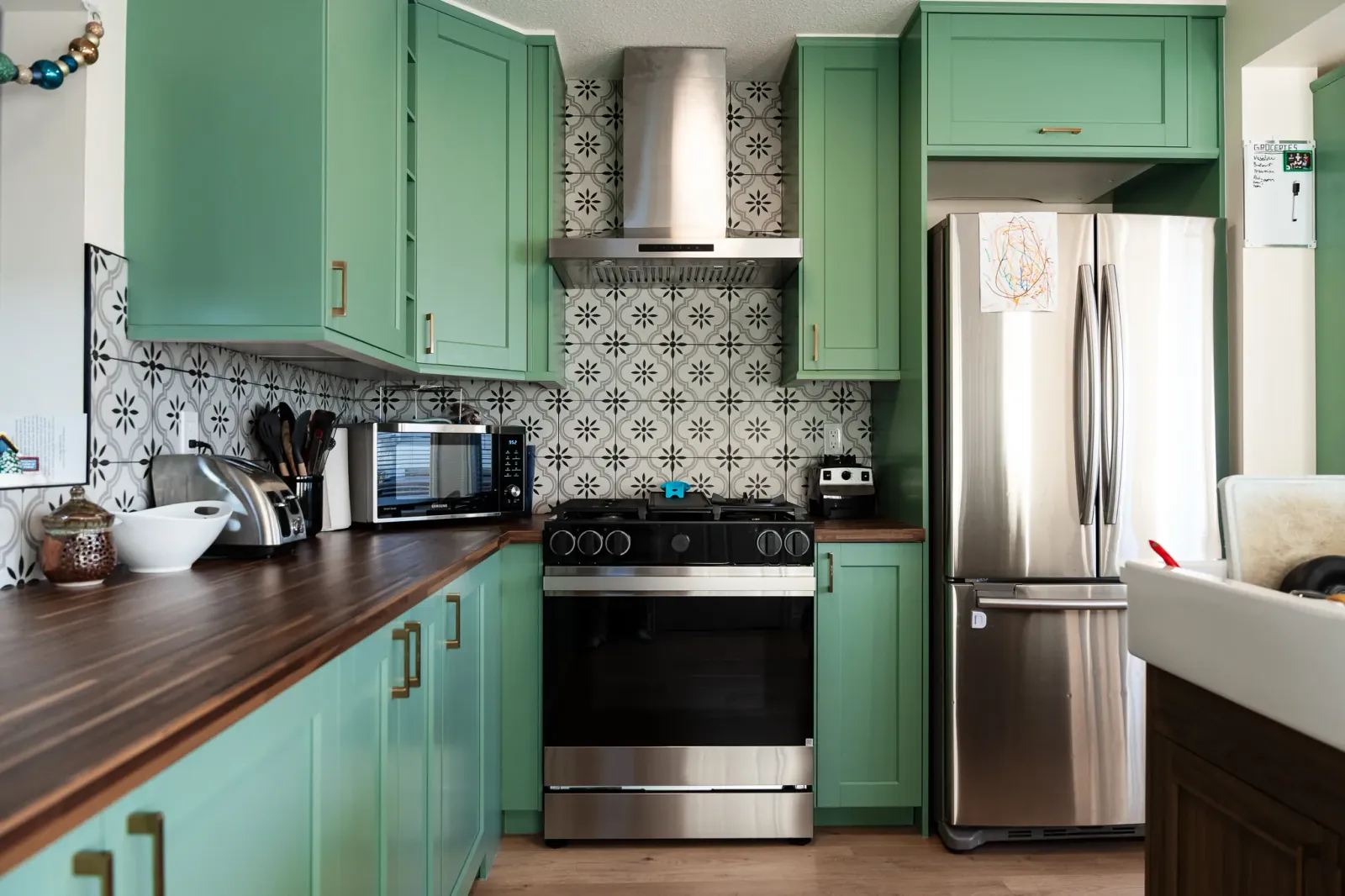
When a kitchen facelift makes sense
A facelift focuses on the visible layers of a kitchen. Depending on condition and compatibility, it may include:
- Professional cabinet painting or door and drawer-front replacement
- New handles, pulls and selected hinges
- Countertop and backsplash replacement
- Sink and faucet replacement in the existing location
- Decorative lighting updates where the existing electrical plan supports them
- Wall paint, trim and minor finish repairs
The strongest facelift candidate has sturdy, square cabinet boxes, a layout that serves the household, useful storage and no known water or structural damage. Appliances should fit the existing openings or the modifications should be minor and planned.
What a facelift does not solve well
New doors cannot correct swollen cabinet boxes, inadequate drawers, failing hardware throughout the kitchen or an island that blocks circulation. New counters also lock in the cabinet footprint beneath them, making a later layout change more wasteful.
When a full kitchen renovation is justified
A full renovation becomes reasonable when the work needs to address function as well as appearance. Common triggers include:
- Poor traffic flow or unsafe appliance-door conflicts
- Insufficient storage or work surface
- Damaged, low-quality or poorly configured cabinetry
- Major appliance-size changes
- Inadequate task lighting, receptacles or ventilation
- Plumbing, gas or electrical changes
- Flooring that runs beneath the cabinetry and must be replaced
- Wall, doorway or structural changes
A full renovation also creates the opportunity to design one coordinated system. Cabinet dimensions, appliance clearances, lighting, receptacles, ventilation and finishes can be resolved together instead of adapted one piece at a time.
What should be inspected before choosing?
Cabinet condition
Check boxes near the sink and dishwasher for swelling, loose joints or previous leaks. Look at drawer operation, shelf support and whether the face frames and doors can accept the proposed finish.
Layout and clearances
Open doors and appliances at the same time. Consider how people move between the sink, refrigerator, cooking area and exits. Measure seating and walkway clearances rather than judging from an inspiration photo.
Services and ventilation
Confirm whether the electrical, plumbing, gas and exhaust arrangements suit the appliances and features you plan to keep or add. Trade work can change the scale of a project even when cabinets stay.
Floor and wall transitions
New cabinet dimensions can expose unfinished flooring or wall areas. A backsplash removal can damage drywall. Include those transitions in the scope so the “small” project does not end with visible gaps.
A practical decision checklist
A facelift is usually the better fit if you can answer yes to all of these:
- The layout works for how the household cooks and moves.
- The cabinet boxes are sound and worth retaining.
- Storage is adequate or can be improved with modest accessories.
- Appliances fit without major cabinet or service changes.
- The goal is primarily aesthetic.
- You understand which surfaces and repairs are included.
A full renovation deserves serious consideration if two or more of those answers are no. Before deciding, price both scopes far enough to understand what is retained, what remains unresolved and what could be reused.
How long will each option take?
A facelift often has a shorter construction period, but cabinet finishing, door production and countertops still require coordination. A full renovation has more dependencies. See How Long Does a Kitchen Renovation Take? for a stage-by-stage schedule.
Which option adds more value?
Value depends on the condition of the home, the quality of the work and whether the result solves a real problem. A disciplined facelift can be better than an unnecessary gut renovation. A new finish on a dysfunctional kitchen may not address what future users notice most.
Choose the smallest scope that solves the real problem
The goal is not to maximize demolition. It is to avoid paying for a visual update when the kitchen needs functional work—or replacing sound components when the layout already succeeds. A measured assessment gives both options a fair comparison.